
Are Essential Oils Safe for Cats? What the Research Actually Says
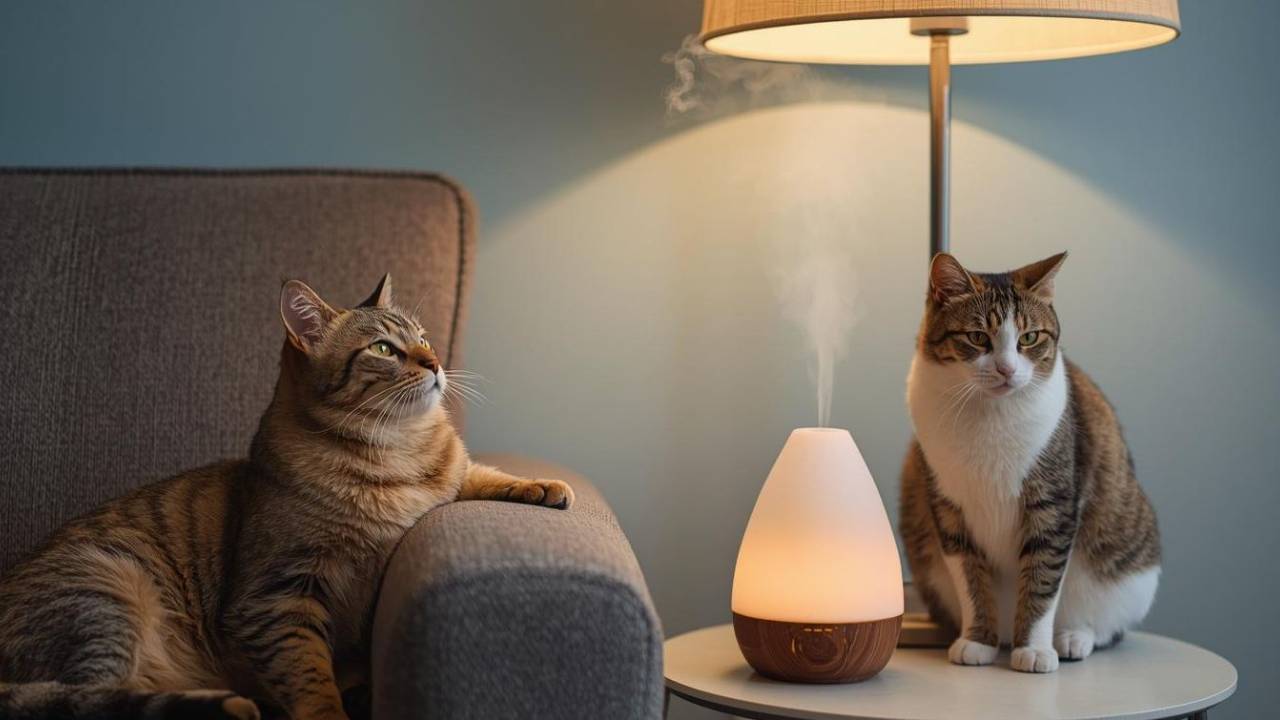
If you've searched "essential oils and cats" online, you've likely come across some strong warnings — words like toxic, sometimes even deadly. Some of that caution is warranted. A lot of it isn't.
The science tells a more nuanced story than most of what's circulating online. A recent research study adds important context to this conversation — the kind that can replace blanket warnings with informed decisions. Let's look at what it actually says.
Why Cats Process Chemicals Differently
To understand the concern around essential oils and cats, it helps to know a little about how a cat's liver works.
Cats are naturally low in an enzyme called glucuronyl transferase (also known as UGT). These are phase II liver enzymes that break down certain chemical compounds — including phenols — in humans, dogs, and most other mammals. A cat's capacity for this process is estimated at roughly 15% of what humans and dogs can do.
That's the real, science-based reason for caution. It's not that essential oils are poison to cats. It's that cats metabolize certain compounds more slowly, which means overexposure is the primary concern — not a single, brief encounter with a well-chosen oil.
Essential oils that are high in phenols are the ones that deserve extra care around cats:
- oregano (Origanum vulgare)
- clove (Syzygium aromaticum)
- cinnamon leaf (Cinnamomum verum)
- cinnamon bark (Cinnamomum zeylanicum)
- thyme ct thymol (Thymus vulgaris CT thymol)
Also use caution with strong oils, such as:
- eucalyptus (Eucalyptus globulus and Eucalyptus radiata)
- rosemary ct 1,8 cineole (Salvia rosmarinus CT 1,8-cineole)
- peppermint (Mentha × piperita)
What a New Study Actually Found
Here's where things get interesting.
A 2016 study looked at how cats, dogs, and humans process certain compounds through two liver pathways: glucuronidation (the primary pathway for dogs and humans) and glucosidation (an alternate pathway cats rely on instead).
The finding that changes the conversation? When researchers measured total elimination over time, cats cleared the compound at levels comparable to dogs and humans.
Cats can process these compounds. They just do it differently — through glucosidation rather than glucuronidation. And it takes them about twice as long to clear the same amount.
This doesn't mean we stop being careful. It means the old belief that cats simply cannot process essential oil compounds isn't accurate. The concern isn't categorical — it's about dose and frequency. It's about overexposure.
That's an important distinction. And it's one that beliefs around pine, citrus, and even Tea Tree (Melaleuca alternifolia) haven't always accounted for. Many of the "essential oils are toxic for cats" claims circulating online are rooted in misinterpreted research findings. That doesn't make every essential oil risk-free around cats — but it does mean we can approach this topic from a more informed place.
The Rule That Changes Everything: No Topical Use
Whatever oil you're considering, this one is non-negotiable: don't apply essential oils directly to your cat's skin or coat.
Cats groom themselves. Anything on their fur goes directly into their body. Since ingestion is a far more concentrated form of exposure than gentle inhalation, topical use bypasses all the safety measures we'd otherwise have in place.
It's simply how cats are wired.
Diffusing Essential Oils Around Cats — What Safe Looks Like
Can you diffuse essential oils with your cat in the home? For many oils, used thoughtfully, yes. A growing number of cat guardians — including professional aromatherapists — do this successfully every day.
A water-based, ultrasonic diffuser is what I recommend. It releases micro-droplets at low concentration, which is gentler than other diffusion methods.
A few practices that make all the difference:
- Diffuse in a well-ventilated room
- Keep sessions shorter and less frequent than you would for yourself
- Always give your cat the ability to leave the room — this is non-negotiable
- Use oils in moderation; less is genuinely more
- Pay attention to your cat's normal behavior so you'll notice if something feels "off"
- Place the diffuser where it can't be knocked over
The safest method of all? Inhalation after self-selection — meaning your cat chooses to come near the scent on their own terms. That's aromatherapy working the way it was meant to.
Gentle Alternatives Worth Knowing
If you'd rather take the more cautious path and skip essential oils altogether, there are good options worth knowing about.
Hydrosols are water-based and much gentler than essential oils. They're generally considered safe for cats and are a great place to start. Learn more in Hydrosols 101
Dried herbs are another option many cat guardians overlook. Lavender, chamomile, and other dried botanicals can create a calm, aromatic environment without any of the concentration concerns of essential oils. I share more ideas in Herb Gardens: Safe Aromatherapy for Cats.
And if Tea Tree specifically has you worried, I go much deeper into that topic here: Dogs, Cats, and Tea Tree Essential Oil
The Bottom Line
Cats are unique, and working with that — rather than around it — is what safe aromatherapy looks like. Their slower metabolic pathway calls for more intentionality, not alarm. The research shows cats can process plant compounds. That makes moderation, low doses, ventilation, and attention the foundation of sound practice.
You have more options than the internet would have you believe.
Want a complete guide to safe diffusing for all your fur babies? The Pet Parents Guide to Diffusing Essential Oils covers which how to diffuse safely around both dogs and cats, and what signs of overexposure to watch for.
Grab your free copy here →The Pet Parents Guide to Diffusing Essential Oils
Join my email community and learn more about animal aromatherapy
and other natural remedies for your fur baby... and receive my FREE
Pet Parent's Guide to Diffusing Essential Oils
AND a special offer on my Essential Oil Safety Video Trainings
We hate SPAM. We will never sell your information, for any reason.
